

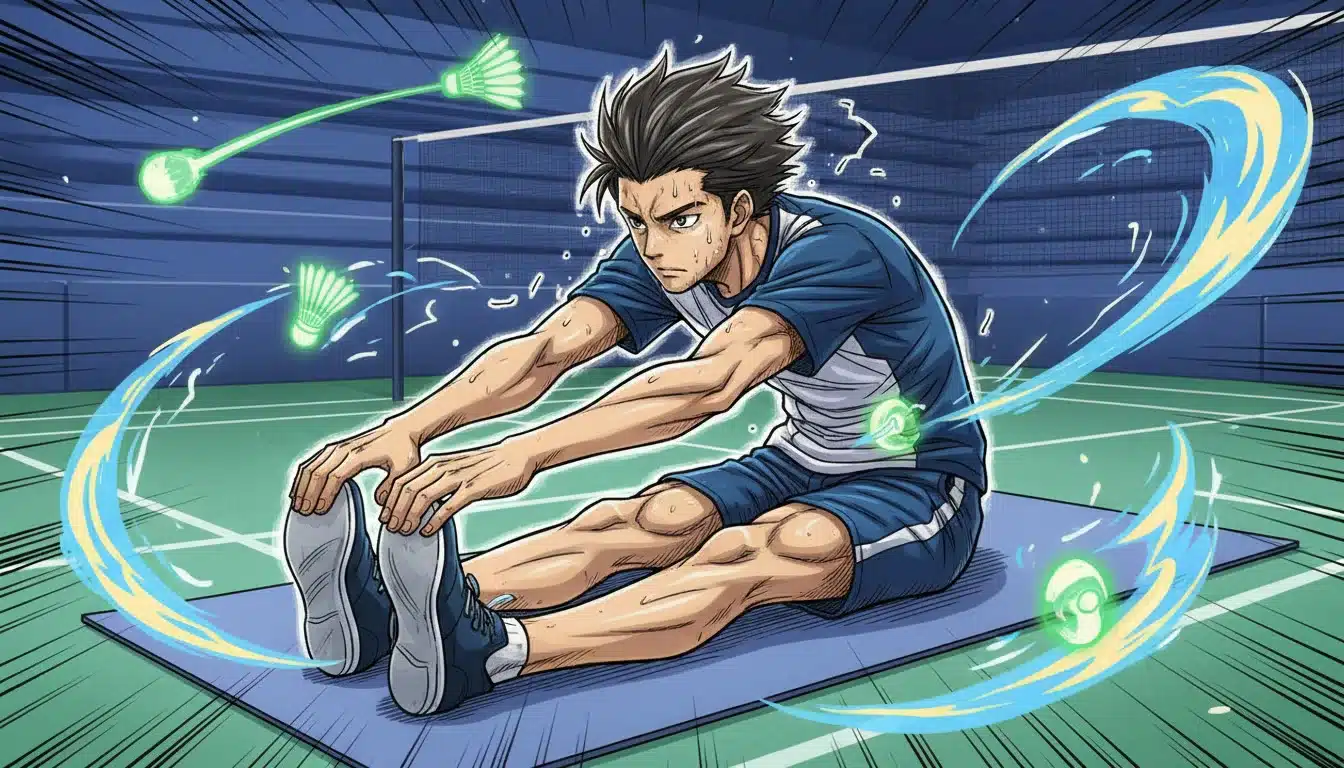

Play Longer, Play Better
Understand common badminton injuries and discover how to prevent them effectively using official BWF recommendations
Badminton is considered a low-risk sport for injuries, primarily due to the absence of physical contact with opponents. However, the explosive movements, powerful strokes, and rapid reflexes that characterize this sport place intense strain on tendons and ligaments. According to the Badminton World Federation (BWF), a preventive approach combined with proper injury management constitutes the best strategy for maintaining healthy and sustainable badminton practice.
This article presents the most common types of injuries in badminton, the RICE medical protocol recommended by the BWF, and best practices for prevention and recovery to optimize your athletic longevity.
Common Badminton Injuries: Understanding the Risks
Acute Injuries
Acute injuries typically occur suddenly during a specific movement or accident on court. According to BWF coaching manuals, typical acute badminton injuries include:
Ankle sprains represent the most frequent injury in badminton. They occur during hyperextension of the joint capsule, often caused by poorly controlled foot placement, sudden lateral movement, or unbalanced landing after a jump. Sprains cause swelling, bruising (blue discoloration), and pain in the affected area.
Muscle tears and strains particularly affect leg muscles (calves, hamstrings, quadriceps) stressed during explosive movements and lunges. These injuries result from excessive stress or inadequate warm-up.
Achilles tendon rupture constitutes the most serious badminton injury. It generally occurs without warning, with a sudden, brutal crack. Contrary to common belief, this rupture isn’t caused by insufficient warm-up but results from overload or incorrect tendon stress. Professional players like Denmark’s Tine Rasmussen have proven that return to the highest level remains possible after this injury, although the healed tendon never regains complete resilience (80-90% at best).
Eye injuries, while rare, can occur, particularly in doubles when the shuttlecock is struck at close range.
Chronic Injuries
Chronic injuries develop gradually over time, generally due to overtraining or repeatedly performing technical movements incorrectly. The two most common chronic injuries in badminton are:
Patellar tendinitis (tendon located just below the kneecap) results from repeated jumping and landing, particularly during smashes.
Epicondylitis (tennis elbow) affects the elbow and often stems from too tight a racket grip or incorrect hitting technique, especially on the backhand.
The RICE Protocol: Immediate Response to Acute Injuries
According to official BWF recommendations, any acute injury must be treated immediately following the RICE protocol (Rest, Ice, Compression, Elevation). This medically validated method minimizes damage and accelerates healing.
R – Rest
Stop playing immediately when an injury occurs. Continuing to play “despite it” can significantly worsen the injury, increase healing time, and risk causing a secondary compensatory injury.
I – Ice
Apply ice to the affected area to reduce pain, slow cellular activity, and reduce cell death in the affected zone. Important: Never apply ice directly to the skin and limit application to a maximum of 15 minutes to avoid tissue damage. Wait one hour before a new 15-minute application.
C – Compression
Use an elastic bandage to compress the injured area. This compression significantly reduces bruising formation. The less bruising present, the shorter the healing time.
E – Elevation
Elevate the injured body part to facilitate drainage of fluids responsible for bruising and reduce swelling.
Warning: For ankle sprains, a compression bandage must be applied within 3 minutes of the accident to stop internal bleeding and significantly reduce healing time. After following the RICE protocol, always consult a qualified physician, even for minor injuries. A succession of small joint injuries can lead to arthrosis, even in young players.
Injury Prevention: The Pillars of Protection
According to BWF coaching manuals, the best way to manage injuries is to take numerous practical preventive measures. Prevention rests on five fundamental pillars.
1. Appropriate Equipment
Shoes: Shoe selection constitutes the most important preventive element. The BWF recommends badminton-specific shoes with non-slip soles and optimal lateral support. Absolutely avoid running shoes with high soles that considerably increase sprain risk. Replace your shoes as soon as foot support becomes insufficient, and tie your laces properly to avoid tripping.
Racket grip: Use non-slip overgrips and change them regularly. A slippery grip forces you to squeeze the racket harder, increasing risks of muscle fatigue and epicondylitis. Also verify that your racket handle isn’t cracked: the racket head can reach 300 km/h during a smash.
Clothing: Wear clothing allowing complete range of motion. Between matches, put on a tracksuit to keep your muscles warm: warm muscles are much less vulnerable to injuries. The tracksuit should be worn on court until you’re actually sweating.
For players with a tendency toward ankle sprains, joint taping provides additional stability. Some players also use Kinesio Tape to treat slight tears and muscle tension.
2. Warm-up: Preparing the Body for Effort
Warm-up raises muscle temperature and prepares ligaments for badminton’s intense demands. The BWF recommends a structured warm-up in several phases:
Aerobic phase (5-10 minutes): Begin with general exercises increasing heart rate and body temperature: light jogging, jump rope, or lateral movements. This phase circulates blood to muscles and prepares them for effort.
Dynamic stretching: Dynamic stretching is recommended during warm-up, unlike static stretching. They require progressive increase in range and movement speed. Key exercises include:
- Forward lunges: From standing position, lunge forward with one foot, then return to starting position. Alternate legs. Ensure the body stays upright and the knee doesn’t extend beyond the toe.
- Straight leg swings: Standing on one foot, swing the other straight leg forward and backward, then left to right. Keep upper body still by fixing on a stable point.
- Side steps and zig-zags: Reproduce badminton-specific movements to prepare muscles for rapid lateral movements.
- Progressive jumps: Start with small jumps on two feet, then progress to more explosive jumps. Land on toes then lower the heel.
Joint mobilization: Perform gentle rotations of shoulders, wrists, hips, and ankles to prepare all stressed joints.
Warm-up with shuttlecock (5-10 minutes): Finish with progressive rallies to accustom the body to specific technical movements. In singles, cover the entire court surface. In doubles, include body shots and serve-return exercises.
3. Correct Technique
Appropriate technique protects against chronic injuries. For lunges, always direct the foot toward the impact point and flex the knee in the same direction. When landing after a jump smash, point the landing foot’s toes to the side (not forward) to avoid overloading the Achilles tendon.
Use a relaxed racket grip to reduce epicondylitis risk. Excessive tension in the forearm from too tight a grip promotes elbow tendon inflammation.
4. Court Safety
Remove stray shuttlecocks from the court and surroundings: they represent a major ankle sprain risk. Use a damp towel at courtside to regularly clean your shoe soles and maintain traction. In doubles, the front player should avoid turning completely around to see what their partner is doing: this movement increases eye injury risk.
5. Progressive Load Management
Avoid playing on overly hard surfaces when possible. If unavoidable, vary exercises to reduce tension on certain muscles and joints. Respect training periodization principles to alternate loading and recovery phases.
Recovery and Cool-down: Essential for Regeneration
According to the BWF, cool-down is as important as warm-up for injury prevention and optimal recovery. This phase helps the body progressively return to resting state in a controlled manner.
Aerobic Cool-down Phase (5-15 minutes)
After training or match, perform an aerobic exercise with gradually decreasing intensity: slow jog ending in normal walk, or stationary bike. This activity helps to:
- Remove fluids collected in and around muscles
- Progressively reduce heart rate and blood pressure
- Eliminate lactic acid (product of intense exercise) by transporting it to the liver where it can be reconverted into an energy source
- Reduce likelihood of malaise or fainting
Static Stretching (10-15 minutes)
Unlike warm-up which favors dynamic stretching, cool-down uses static stretches held for 15 to 30 seconds. These stretches:
- Return muscles to their normal resting length
- Prevent progressive muscle shortening
- Reduce muscle stiffness
- Prevent technique alteration and injuries related to shortened muscles
Focus on the most stressed areas in badminton:
- Calves (gastrocnemius and soleus): In lunge position, keep the back foot’s heel on the ground and lean slightly forward
- Hamstrings: In lunge position, shift weight to the straight back leg
- Quadriceps: Standing on one foot, bring the other foot toward buttocks while holding the ankle
- Adductors (groin): Feet apart, push hips to one side while keeping both feet on the ground
- Shoulders and back: Place one arm behind head between shoulder blades, the other arm behind back, and try to join fingers
- Wrists: Press hands together in front of body, fingers pointing upward
Emphasize deep breathing and relaxation to perform stretches more effectively.
Post-training Hydration and Nutrition
Recovery in the hour following exercise is crucial. Snacking within 60 minutes after effort helps to:
- Repair tissue damage (protein)
- Replace fluid losses (hydration)
- Replace energy stores (carbohydrates)
- Protect the immune system (carbohydrates)
Examples of good recovery snacks: bowl of cereal with milk, milkshake, banana, yogurt, lean meat sandwich, nuts and dried fruit, water or isotonic drinks.
Special Cases and Specific Injuries
Achilles Tendon Rupture: Management and Rehabilitation
This serious injury deserves particular attention. After rupture, the player generally doesn’t feel immediate pain but must be transported to hospital immediately. Treatment can be surgical (operation) or conservative (strict immobilization).
Rehabilitation takes several months and requires rigorous medical monitoring with progressive rehabilitation exercises. Return to the highest level is possible: Denmark’s Tine Rasmussen won the All England Open two years after her Achilles tendon rupture.
Chronic Injuries: Prevention and Early Detection
Chronic injuries develop gradually and often result from overtraining. To prevent them:
- Respect rest periods in your training program
- Vary exercise types to avoid repetitive stress on the same structures
- Correct your technique, particularly racket grip and footwork
- Consult at the first sign of persistent pain, before the injury worsens
Integrated Prevention Program: Practical Summary
To optimize your badminton longevity, integrate these practices into your routine:
Before Each Session
- Check the condition of your shoes and equipment
- Perform 10-15 minutes of progressive warm-up
- Clear the court of stray shuttlecocks
- Hydrate properly before starting
During Practice
- Maintain appropriate technique on all shots
- Wear a tracksuit during long breaks
- Hydrate regularly
- Stop immediately if you feel abnormal pain
After Each Session
- Perform 15-20 minutes of cool-down and stretching
- Eat and drink within the hour
- Apply ice to painful areas
- Note any unusual discomfort in your training log
Frequently Asked Questions About Badminton Injury Prevention
What is the RICE protocol in badminton?
The RICE protocol (Rest, Ice, Compression, Elevation) is the BWF-recommended method for immediately treating acute injuries. It minimizes damage and accelerates healing by stopping internal bleeding and reducing swelling. For ankle sprains, the compression bandage must be applied within 3 minutes of the accident.
What are the most common badminton injuries?
The most common injuries are ankle sprains (the most frequent), muscle tears affecting calves and hamstrings, patellar tendinitis (knee), epicondylitis (elbow), and in severe cases, Achilles tendon rupture which requires several months of rehabilitation.
How long should a badminton warm-up last?
The BWF recommends a 10-15 minute warm-up structured in three phases: 5-10 minutes of aerobic exercises (jogging, jump rope) to raise body temperature, progressive dynamic stretching, and 5-10 minutes of progressive rallies with the shuttlecock to accustom the body to technical movements.
Should I stretch before or after badminton?
Before badminton: favor dynamic stretches with progressive movements (lunges, leg swings) to prepare muscles for effort. After badminton: perform static stretches held for 15-30 seconds to return muscles to their normal length, prevent stiffness, and promote recovery.
What should I do immediately after an ankle sprain in badminton?
Immediately apply the RICE protocol: stop playing (continuing worsens the injury), apply ice for maximum 15 minutes (never directly on skin), apply compression bandage within 3 minutes, elevate the ankle, and consult a doctor even for an apparently minor sprain as repeated injuries can cause arthrosis.
How can I prevent tendinitis in badminton?
To prevent patellar tendinitis and epicondylitis, use a relaxed racket grip, regularly change your grip to avoid squeezing too hard, respect rest periods in your training, correct your hitting technique, and wear appropriate shoes with good support. Proper warm-up and regular stretching are also essential.
Conclusion: Prevention, Performance’s Best Ally
Badminton injury prevention rests on a comprehensive approach combining appropriate equipment, structured warm-up, correct technique, and optimal recovery. The BWF’s RICE protocol provides an effective immediate response to acute injuries, while good preventive practices considerably reduce chronic injury risks.
Remember that playing on an injured body always worsens the situation and prolongs recovery time. Investing 10-15 minutes in proper warm-up and structured cool-down represents minimal insurance to protect your health capital and extend your badminton practice.
When in doubt about an injury, always consult a qualified health professional. A succession of small poorly treated injuries can have lasting consequences, even in young players. Mental preparation also includes accepting the need to take necessary time to fully recover before resuming intensive training.
Your body is your most valuable playing tool: care for it with the same rigor you devote to perfecting your tactics and technique.